
When is hydro jetting needed? In most cases, it is needed when clogs keep coming back, several drains slow down at once, sewer odors appear, or a main sewer line blockage will not clear with basic drain methods. Hydro jetting is also useful when grease, sludge, tree roots, or heavy debris have built up inside a pipe and need to be washed away from the pipe walls.
For homeowners, landlords, property managers, and business owners in Gretna, Omaha, and nearby Nebraska communities, recurring drain problems can interrupt daily life fast. A clogged toilet, backed-up floor drain, or slow kitchen sink may seem small at first, but repeated issues often point to a deeper problem in the sewer line.
JTM Plumbing provides professional drain, sewer, repair, and plumbing service for residential and commercial properties. When you're dealing with stubborn clogs or slow-moving drains, the team can inspect the line, explain the problem, and recommend hydro jetting when it is the right fit.
Signs You May Need Hydro Jetting
A single slow drain does not always mean you need hydro jetting. Sometimes a small clog near the fixture can be cleared with a plunger or drain snake. Hydro jetting becomes a stronger option when symptoms suggest buildup deeper inside the drain or sewer line.
One common warning sign is a clog that returns after basic cleaning. If a drain works for a few days or weeks and then slows again, residue may still be stuck to the pipe walls. Grease, soap scum, sludge, and roots can collect inside the line and catch new debris as water flows past. Over time, the opening becomes smaller, and the problem repeats.
Multiple slow drains are another sign. If a sink, shower, toilet, and floor drain all start acting up, the issue may be in the main line rather than one fixture. A main sewer line blockage can affect the whole property and should be checked by a professional.
You may need hydro jetting if you notice:
- Slow drains in several areas of the home or building
- Gurgling sounds from toilets, tubs, sinks, or floor drains
- Sewer odors near drains or in lower levels of the property
- Water backing up into tubs, showers, or floor drains
- Recurring clogs after snaking or plunging
- Grease-related kitchen drain problems
- Frequent commercial drain backups during busy hours
- Tree roots or heavy buildup found during inspection
For commercial properties, these signs can affect customers, staff, tenants, and daily operations. Restaurants, rental properties, office buildings, salons, and retail spaces often rely on dependable drains every day. Waiting too long can lead to cleanup costs, unpleasant odors, water damage, and emergency repair calls.
JTM Plumbing can inspect the issue and help you decide whether hydro jetting, snaking, repair, or another service is the best next step.
How the Hydro Jetting Process Works
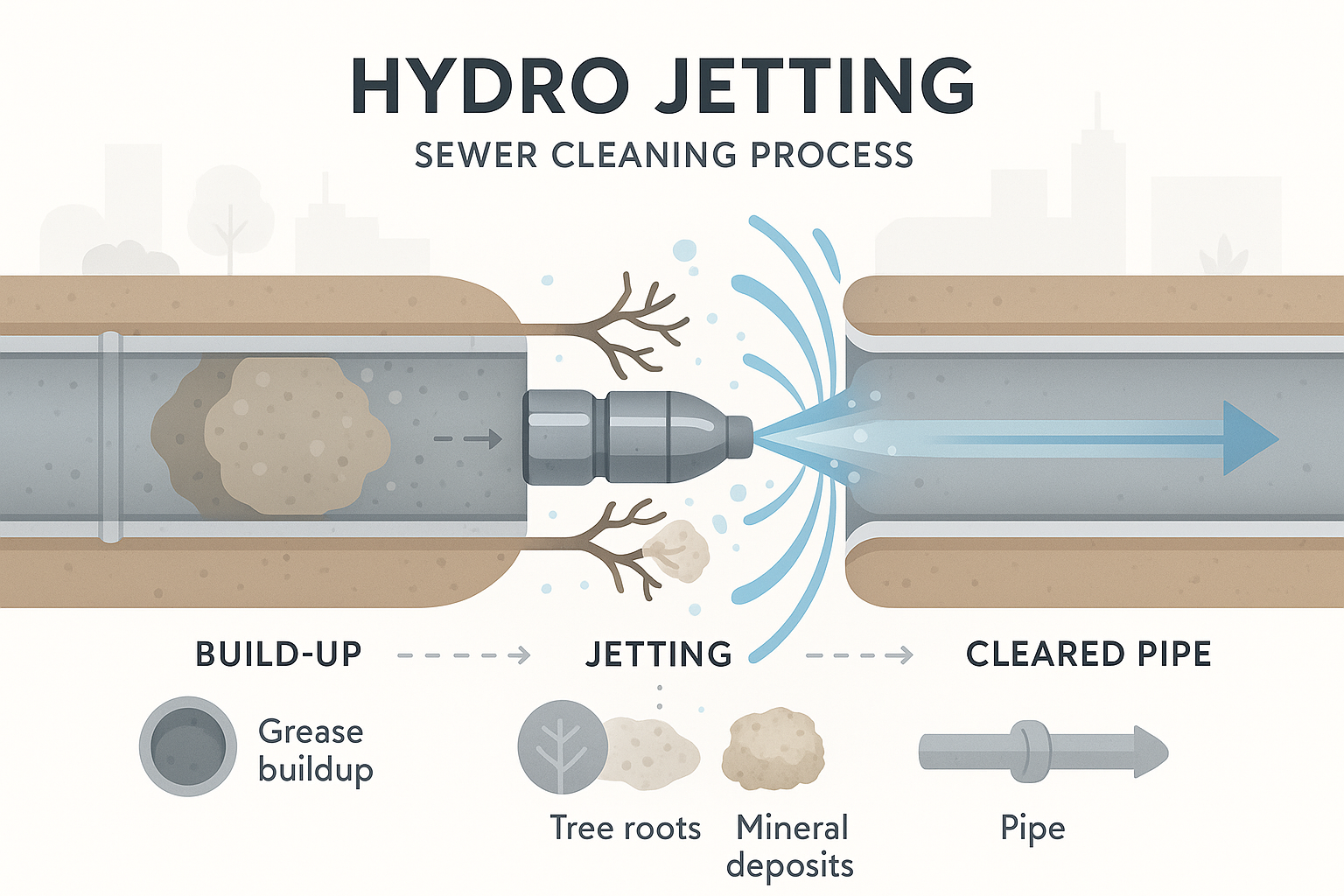
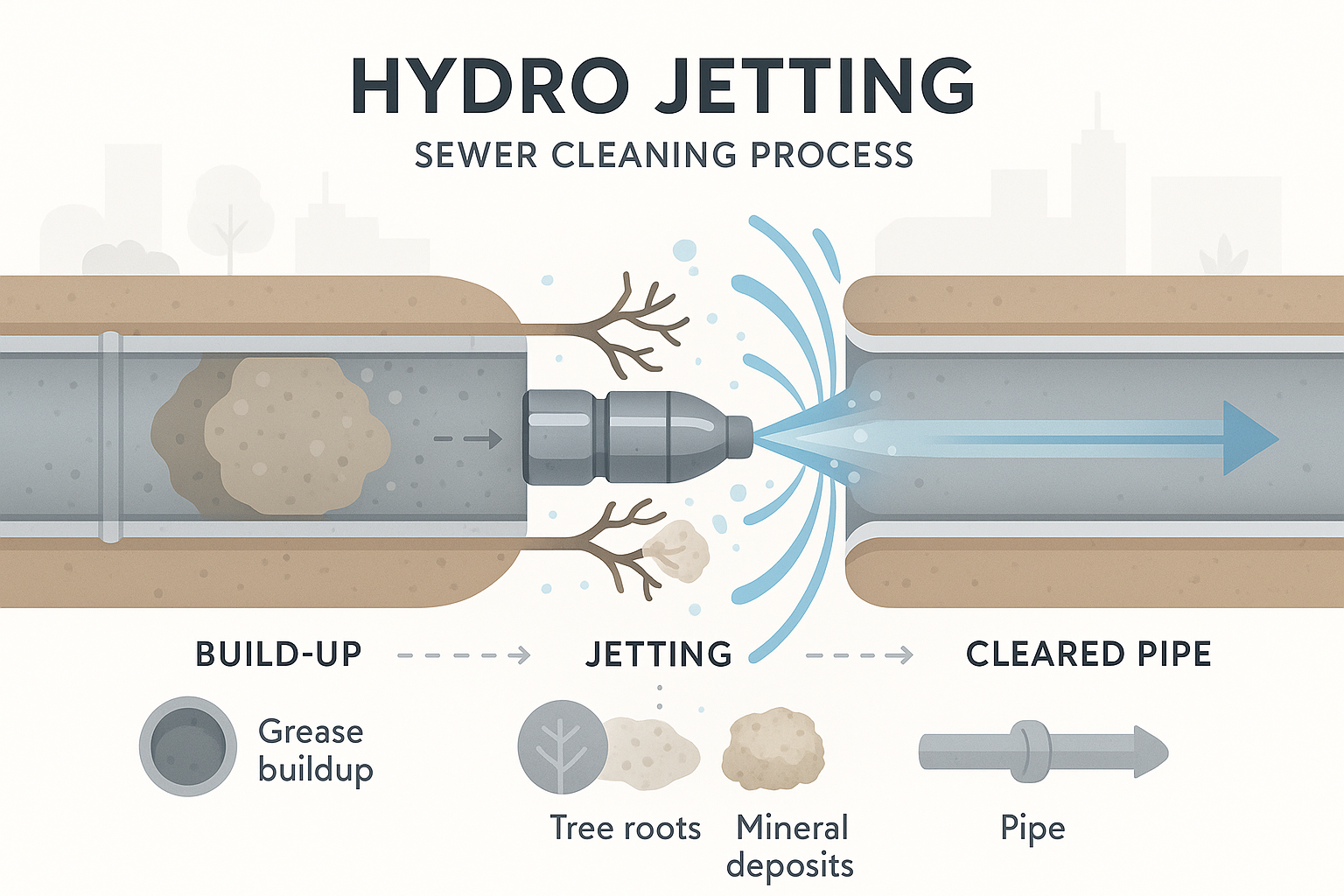
Hydro jetting uses high-pressure water jetting to clean the inside of a drain or sewer line. A plumber inserts a strong hose into an approved access point, such as a cleanout. The hose connects to professional equipment that sends water through a nozzle at controlled pressure.
The nozzle directs water forward and backward. The forward spray helps break into clogs, while the rear-facing spray pushes debris out of the line and helps move the hose through the pipe. As the nozzle moves, water scrubs the pipe walls and flushes buildup through the system.
This process is different from basic clearing. A drain snake may open a small path through the clog, but it can leave grease and sludge behind. Hydro jetting cleans slow-moving drains by washing more of the pipe interior, which helps restore better flow and reduce the material that can cause another blockage.
Before starting, a plumber may recommend a camera inspection. This step helps locate the blockage, check the pipe condition, and confirm whether jetting is safe. Older pipes, damaged sections, severe corrosion, collapsed lines, or large offsets may need repair instead of high-pressure cleaning.
Professional hydro jetting equipment may include a water jetter, flexible hose, nozzles, pressure controls, and inspection tools. The plumber chooses the right setup based on the line size, clog type, pipe material, and condition of the system. Some jobs need careful pressure control, while more complex jobs may require extra inspection, multiple passes, or a different service plan.
Hydro jetting is not a DIY job. Rental equipment can be difficult to control, and using the wrong pressure or nozzle can cause damage. A trained plumber knows how to match the method to the pipe and when to stop if repair is the safer choice.
What Hydro Jetting Can Remove From a Sewer Line
Hydro jetting is often used when the clog is caused by material that has built up over time. The process is powerful because it removes both the blockage and much of the residue along the pipe walls. That makes it helpful for recurring clogs and drain issues that come back after standard cleaning.
Common materials hydro jetting can remove include grease, fats, oils, sludge, soap scum, food waste, sand, silt, mineral scale, and some tree roots. It can also clear organic waste and debris from sewer pipes, main lines, and high-use commercial drains.
Tree roots are a common cause of sewer line trouble. Roots can enter through small cracks, loose joints, or older pipe sections. Once inside, they catch paper, waste, and other debris. A hydro jet can cut through smaller root masses and flush loose material from the line. If roots have entered because the pipe is broken, cleaning may help short-term, but repair may still be needed.
Grease buildup is another major problem, especially in kitchens and commercial properties. Hot grease may go down a drain as liquid, then cool and stick to the inside of the pipe. Food particles and debris collect on the grease, which can create a thick clog. Hydro jetting can wash grease from the line far better than many basic drain methods.
The service may also be useful before certain repair or inspection work. Once the line is cleaned, a plumber can see the pipe more clearly with a camera. This can reveal cracks, offsets, low spots, root entry points, or sections that need repair.
- Grease and sludge
- How Hydro Jetting Helps: Washes sticky buildup from pipe walls
- When to Call JTM Plumbing: Kitchen drains clog often or smell bad
- Tree roots
- How Hydro Jetting Helps: Cuts and flushes smaller root masses
- When to Call JTM Plumbing: Sewer line backs up, or inspection shows roots
- Sand and silt
- How Hydro Jetting Helps: Pushes loose debris through the line
- When to Call JTM Plumbing: Floor drains or outdoor lines slow down
- Mineral scale
- How Hydro Jetting Helps: Helps break down hard buildup in some lines
- When to Call JTM Plumbing: Water flow keeps getting restricted
- Recurring clogs
- How Hydro Jetting Helps: Cleans residue that snaking may leave behind
- When to Call JTM Plumbing: The same drain clogs again after service
- Main line blockage
- How Hydro Jetting Helps: Clears heavy debris from the sewer line
- When to Call JTM Plumbing: Several drains back up at the same time
Hydro jetting is a strong option, but it is not always the only step. If the pipe is cracked, collapsed, or heavily damaged, JTM Plumbing can explain repair options before cleaning continues.
Hydro Jetting vs. Standard Drain Cleaning Methods
Different drain problems call for different methods. A plunger may work for a small toilet clog. A drain snake may clear hair or soft material near a fixture. Hydro jetting is usually considered when the problem is deeper, heavier, or repeated.
Snaking is a common drain cleaning method. A flexible cable moves through the line to break through or pull back a clog. It can be effective for many simple blockages, but it may not fully remove buildup from pipe walls. If grease, roots, or sludge remain, another clog can form.
Chemical drain cleaners may seem convenient, but they can be harsh and unreliable. Many products do not remove tree roots, hard scale, or a deep sewer line blockage. They may also sit in the pipe if the line is fully blocked, creating safety concerns for anyone working on the drain later.
Hydro jetting uses water rather than harsh chemicals. It can clean a wider area inside the pipe and remove material that other methods leave behind. That is why it is often recommended for clogged sewage lines, repeat drain problems, and sewer cleaning on high-use properties.
Still, a responsible plumber should not recommend hydro jetting for every issue. If a clog is shallow and simple, snaking may be enough. If the pipe is damaged, repair may need to come first. If the system has unknown pipe condition concerns, inspection can help prevent avoidable damage.
For property owners, the value is in getting the right diagnosis. JTM Plumbing focuses on matching the service to the problem, not using the same method for every drain call.
Preventive Hydro Jetting for Homes and Commercial Properties
Hydro jetting is not only for emergencies. It can also be part of a preventative plumbing maintenance plan for properties with frequent drain use or a history of buildup. Planned cleaning can help reduce the risk of sudden backups, odors, downtime, and urgent repair costs.
Homeowners may benefit from preventive service if they have older sewer lines, recurring kitchen clogs, or past root problems. Landlords and property managers may use hydro jetting to help keep rental units running smoothly and reduce tenant complaints. Businesses may schedule cleaning around slower hours to limit disruption.
Commercial properties often need more attention because plumbing systems handle heavier use. Restaurants, bars, coffee shops, salons, offices, retail spaces, and multi-unit buildings can collect grease, soap residue, paper products, and debris at a faster rate. Routine cleaning helps maintain flow before a full blockage develops.
Preventive drain care may include:
- Scheduling sewer cleaning before recurring problems return
- Avoiding grease, wipes, paper towels, and hygiene products in drains
- Educating tenants or staff about proper drain use
- Watching for odors, gurgling, and slow drainage
- Requesting inspection after repeated clogs
- Keeping access points clear for faster service
- Asking a plumber about a maintenance schedule for high-use lines
The right schedule depends on the property. A single-family home may only need service when warning signs appear. A restaurant or apartment building may need a regular plan. JTM Plumbing can recommend timing based on your drain history, property type, and pipe condition.
Preventive service also helps with budgeting. Instead of waiting for an emergency backup, property owners can plan drain and sewer maintenance at a better time.
Schedule Hydro Jetting Service With JTM Plumbing
If your drains keep slowing down, sewer odors are spreading, or a main sewer line blockage keeps returning, hydro jetting may be the right solution. It can clear tough buildup, restore better flow, and help reduce repeat clogs when the pipe is in suitable condition.
JTM Plumbing provides drain cleaning, sewer cleaning, repair, installation, and plumbing services for homeowners and businesses in Gretna, Omaha, Bellevue, La Vista, Papillion, Elkhorn, Springfield, and nearby Nebraska communities. The team brings professional equipment, local experience, and clear communication to every service call.
Call JTM Plumbing if you are dealing with clogged sewage lines, slow drains, backups, tree roots, or repeated plumbing issues. A licensed plumber can inspect the line, explain what is happening, and recommend hydro jetting when it makes sense for your property.
You do not have to wait for a full backup to get help. Early service can protect your home, tenants, customers, and daily schedule from larger plumbing problems. Schedule an inspection or service visit with JTM Plumbing and get honest guidance from a local team that knows Omaha-area drain and sewer systems.


.svg)
.webp)