

How long does water heater installation take? In many homes, a standard tank replacement takes about three to four hours when the installation area is accessible and the existing plumbing, gas, or electrical connections are in good shape. A tankless water installation or a heat pump model can take longer, often five to eight hours, because these systems may need added plumbing, venting, gas, electrical, or space adjustments.
For homeowners, landlords, and property managers in Gretna, Omaha, and nearby Nebraska communities, timing matters. A failing unit can interrupt showers, laundry, cleaning, tenant comfort, and daily routines. Knowing what affects the installation time helps you plan your schedule and avoid surprises.
JTM Plumbing provides water heater repair, replacement, installation, and maintenance for residential and commercial properties. Whether you need a quick heater replacement or a planned upgrade, the team can inspect your current setup, explain the project, and help restore reliable hot water with professional installation.
Average Installation Time by Water Heater Type
Water heater installation time depends heavily on the type of unit being installed. Replacing a standard tank with a similar tank is usually the fastest option. Changing from a tank to a tankless model, relocating the unit, upgrading venting, or adding electrical work can extend the appointment.
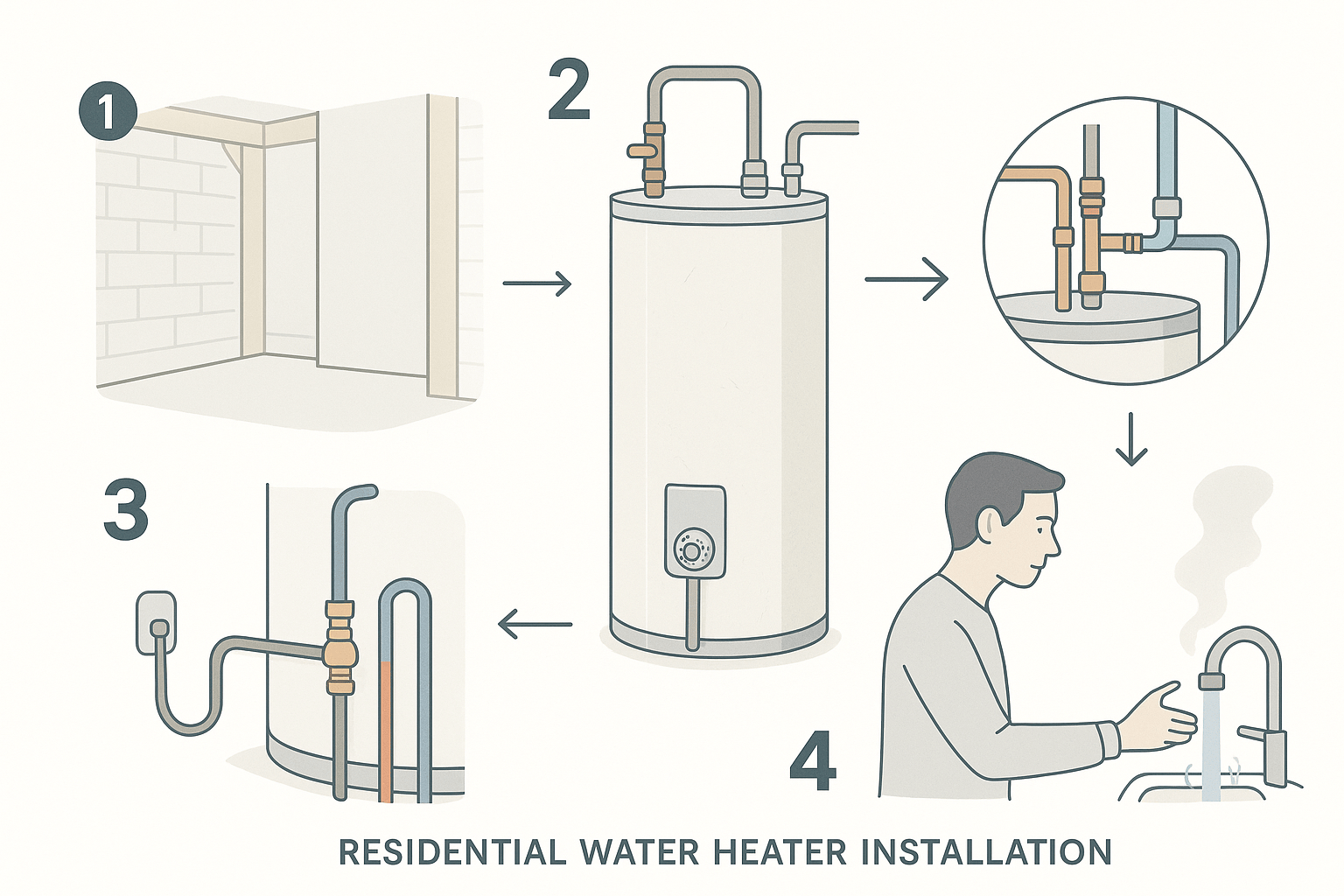
A standard gas or electric tank replacement usually takes about three to four hours. This includes draining and disconnecting the old unit, removing it, placing the new tank, connecting water lines, connecting gas or electrical components, filling the tank, checking for leaks, and testing the system.
Tankless water heaters often take longer. These units heat water on demand, so they may require different venting, larger gas supply, updated electrical service, or new mounting. If the home already has the right setup, the work may move faster. If upgrades are needed, the project can take most of the day.
Heat pump water heaters can also take extra time. These units need proper space, airflow, drainage, and electrical connections. They can be efficient, but placement matters because the unit pulls heat from the surrounding air.
- Similar tank replacement
- Common Timeframe: 3 to 4 hours
- Why the Time Varies: Existing connections are usually reused or adjusted
- Gas tank replacement
- Common Timeframe: 3 to 5 hours
- Why the Time Varies: Gas line, venting, and safety checks may add time
- Electric tank replacement
- Common Timeframe: 2 to 4 hours
- Why the Time Varies: Electrical condition and panel access affect timing
- Tank to tankless conversion
- Common Timeframe: 5 to 8 hours or longer
- Why the Time Varies: Venting, gas, electrical, and wall mounting may be needed
- Heat pump water heater
- Common Timeframe: 5 to 8 hours
- Why the Time Varies: Airflow, condensate drain, and electrical setup matter
- Relocated water heater
- Common Timeframe: Varies
- Why the Time Varies: New plumbing, gas, electrical, or drain lines may be required
Most straightforward installations can be completed in one visit. Larger upgrades may need more planning, especially if permits, code updates, or extra materials are involved.
JTM Plumbing can review your current water heater, installation area, and household needs before work begins. That way, you receive a realistic timeline and understand what may affect the appointment.
What Happens During a Water Heater Installation Appointment
A water heater installation appointment usually follows a clear process. First, the plumber confirms the work area, checks the current unit, and reviews any known issues with you. If you are replacing a failed unit, the technician may also look for leaks, corrosion, venting problems, or damaged connections.
Next, the old unit is shut down safely. For gas heaters, the gas supply must be turned off. For electric heaters, power must be shut off at the proper breaker or disconnect. The water supply is also turned off before the tank is drained.
After the old heater is drained, the plumber disconnects the water lines, gas line or electrical wiring, venting, and any related components. The old tank is then removed from the space. This step may take longer if the tank is in a tight closet, basement corner, attic, crawl space, or apartment utility room.
Once the old unit is out, the new heater is set in place. The plumber connects the water lines, gas or electrical supply, venting, drain pan, expansion tank, relief valve, and other required parts. The system is then filled, tested, and checked for leaks.
A standard appointment may include:
- Site review: The technician checks the unit, location, and access path.
- Safe shutoff: Water, gas, or electrical service is shut off before removal.
- Old unit removal: The existing heater is drained, disconnected, and hauled out.
- New unit placement: The replacement is positioned and leveled.
- Connections: Water, gas, electrical, venting, and safety components are installed.
- Testing: The system is filled, inspected, and checked for proper operation.
- Customer walkthrough: The technician explains basic use, temperature settings, and maintenance tips.
After installation, the unit needs time to heat water. A tank heater may take about 30 to 90 minutes to produce a full tank of hot water, depending on the model, fuel type, tank size, and incoming water temperature. Tankless units usually provide hot water once the installation and testing are complete, but the plumber will still verify flow and temperature before leaving.
What Can Make Heater Replacement Take Longer
Some heater replacement jobs are simple. Others take longer because the home needs updates before the new unit can operate safely and correctly. The older the home or the more different the new system is from the old one, the greater the chance of extra work.
One common delay is poor access. A water heater tucked behind storage, in a tight closet, or down a narrow stairway takes more time to remove and replace. Large tank units may require extra care when being moved through finished spaces.
Old plumbing can also add time. Corroded shutoff valves, worn fittings, leaking pipes, or outdated supply lines may need repair during installation. If the plumber finds a damaged connection, fixing it before attaching a new unit protects the system and reduces the risk of leaks.
Gas and electrical issues can also change the timeline. Gas water heaters need proper fuel supply, shutoff valves, venting, and combustion air. Electric heaters need correct wiring, breaker size, and safe connections. Tankless systems may need higher gas capacity or updated electrical work.
Factors that can add time include:
- The old tank is rusted, leaking, or difficult to drain.
- The installation area is cramped or blocked.
- Water, gas, or electrical connections are outdated.
- Venting does not meet current safety requirements.
- A tankless water conversion needs added work.
- The new unit is larger or shaped differently than the old one.
- Code updates, permits, or special parts are required.
- The heater is being moved to a new location.
Landlords and property managers should also plan for access. If the unit is in an apartment, utility closet, or shared mechanical area, make sure tenants know when service is scheduled. Clear communication helps the plumber start on time and reduces downtime for residents.
JTM Plumbing helps customers plan by asking the right questions before the installation appointment. Details about the current water heater, fuel type, location, age, leaks, and access help the team bring the right tools and materials.
Why Professional Installation Protects Your Home
Professional installation matters because water heaters involve plumbing, heat, pressure, gas, electricity, venting, and safety valves. A poor installation can lead to leaks, unreliable hot water, carbon monoxide risk with gas units, electrical hazards, short equipment life, and warranty problems.
A licensed plumber knows how to install the unit according to manufacturer instructions and local requirements. That includes proper water connections, approved gas or electrical connections, relief valve placement, venting, drainage, expansion control, and safe startup.
Professional heater installers also know when the existing setup needs attention. For example, a new water heater may not perform well if connected to old shutoff valves, weak fittings, blocked venting, or undersized gas lines. Fixing these issues during installation helps prevent future repair calls.
A professional installation can help with:
- Safer gas, electric, and plumbing connections
- Better water heater performance
- Lower risk of leaks and damage
- Correct venting for gas units
- Proper temperature and pressure relief setup
- Warranty protection when professional installation is required
- Cleaner removal and disposal of the old unit
- Clear maintenance recommendations
DIY installation may appear to save money upfront, but mistakes can be expensive. Water damage, failed inspections, unsafe venting, or voided warranty coverage can cost far more than hiring a trained plumber from the start.
JTM Plumbing provides water heater service for homes and rental properties throughout the Omaha metro area. The team focuses on safe installation, clear communication, and reliable results so customers know the job was done right.
How to Prepare Before Installation Day
A little preparation can make the installation appointment smoother and faster. You do not need to do the plumbing work yourself. The goal is to make sure the technician can access the unit and has the information needed to plan the project correctly.
Start by clearing the installation area. Move boxes, cleaning supplies, tools, laundry items, and stored belongings away from the water heater. Make sure there is a clear path from the entry door to the unit so the old tank can be removed and the new one can be brought in.
If you manage a rental property, notify tenants about the appointment. They may be without hot water for several hours. Let them know when technicians will arrive and whether access is needed inside the unit.
Before service, it also helps to note any current problems. Tell the plumber if the unit is leaking, making noise, running out of hot water, tripping a breaker, producing rusty water, or failing to stay lit. These details help identify related repair needs.
Helpful preparation steps include:
- Clear the area around the water heater.
- Make a path for removal and new unit delivery.
- Secure pets away from the work area.
- Avoid scheduling showers, laundry, or dishwashing during the service window.
- Share details about leaks, noises, or heating problems.
- Ask whether permits or code updates may apply.
- Keep your phone nearby in case the plumber needs quick approval for added work.
For apartment buildings or commercial properties, preparation may include coordinating access with maintenance staff, posting a notice about temporary water shutoff, and scheduling during a lower-use time.
After installation, ask the technician to show you the shutoff valve, temperature setting, and any maintenance items you should know. For tank units, yearly maintenance can help reduce sediment buildup. For tankless units, routine flushing or descaling may be recommended depending on water quality.
Schedule Water Heater Installation With JTM Plumbing
A water heater installation can often be completed the same day, especially when you are replacing a standard tank with a similar model. Tankless water systems, heat pump units, code updates, or difficult access can take longer, but a professional inspection gives you a clear idea of what to expect.
JTM Plumbing provides water heater installation, heater replacement, repair, and maintenance for homeowners, landlords, property managers, and businesses in Gretna, Omaha, Bellevue, La Vista, Papillion, Elkhorn, Springfield, and nearby Nebraska communities. The team can help you choose the right unit, remove the old one, install the new system, and test everything before the job is complete.
Call JTM Plumbing if your current water heater is leaking, noisy, unreliable, too small, or no longer keeping up with your household or tenant needs. A licensed plumber can review your setup, explain the installation time, and schedule service at a time that works for your property.
Reliable hot water should not be a guessing game. Schedule your water heater installation with JTM Plumbing and get honest guidance, professional workmanship, and local service from a team that understands Omaha-area homes and businesses.


.svg)
.webp)