What Piping Materials Are Recommended for Rheem Water Softener Connections?
Connecting your Rheem water softener's bypass valve to your home's water supply requires careful consideration of piping materials. The good news is that Rheem softeners are designed to be compatible with several standard plumbing options commonly found in homes across Gretna, Omaha, and surrounding Nebraska communities. Our goal is to ensure a durable, leak-free connection that complies with local plumbing codes and manufacturer specifications.
Understanding Rheem Bypass Valve Connection Sizes
A crucial first step is understanding the connection size of your Rheem water softener's bypass valve. According to the Installation and Operation Manual - Rheem RHS32 Demand Controlled Water Softener, the threads coming out of the bypass valve are typically 1-inch Male NPT (National Pipe Taper). This means you'll need compatible fittings that can securely connect to these 1-inch NPT male threads.
While the bypass valve itself has 1-inch NPT connections, your house's main water lines might be 3/4-inch or 1-inch in diameter. Adapters are readily available to transition between these sizes if necessary. For instance, a common setup might involve connecting a 1-inch FIP (Female Iron Pipe) fitting to the bypass valve, which then transitions to your home's 3/4-inch or 1-inch plumbing.
Here's a general overview of common pipe sizes you might encounter and how they relate to the bypass valve's 1-inch NPT:
- 1-inch NPT (Bypass Valve): This is the direct connection point on the softener.
- 3/4-inch House Water Line: A very common size for residential main lines. You would use a 1-inch FIP x 3/4-inch adapter or a flexible connector designed for this transition.
- 1-inch House Water Line: Also common, especially in newer or larger homes. This allows for a more direct connection, often using a 1-inch FIP fitting or a flexible connector.
Understanding these sizes ensures you purchase the correct fittings and materials for a seamless connection.
Approved Piping Materials for Potable Water
Rheem explicitly approves several types of piping materials for the inlet and outlet connections of their water softener bypass valves. These materials are all suitable for potable (drinking) water and are widely used in residential plumbing. When we install water softeners, we often work with these options due to their reliability and compliance.
The approved materials include:
- Copper Pipe: A traditional and highly durable option. Copper is known for its longevity, resistance to corrosion, and ability to withstand high temperatures and pressures. It's a premium choice, but its cost can be higher, and installation typically requires soldering (which must be done away from the plastic bypass valve) or compression fittings.
- Threaded Pipe: This generally refers to galvanized steel or black iron pipe, though galvanized steel is less common for new potable water installations today due to potential corrosion issues over time. If you have existing threaded pipe, it can be adapted, but we generally recommend modern alternatives for new runs.
- PEX (Crosslinked Polyethylene) Pipe: A flexible, cost-effective, and increasingly popular choice. PEX is easy to install, resistant to freezing (it expands rather than bursting), and does not corrode. It requires specialized crimping or expansion tools for connections, but its flexibility can simplify routing.
- CPVC (Chlorinated Polyvinyl Chloride) Plastic Pipe: Another excellent plastic option, known for its rigidity and resistance to high temperatures and pressures compared to standard PVC. CPVC connections are typically made with solvent cement. It's a good balance of cost and performance.
- Other Pipe Approved for Use with Potable Water: This broad category covers any other material that meets local plumbing codes and NSF/ANSI standards for drinking water, such as PE-RT (Polyethylene of Raised Temperature) pipe, which is similar to PEX.
Each of these materials offers different benefits in terms of durability, longevity, and cost. When considering a water softener for your home, exploring these options can help you make an informed decision. You can learn more about water softeners and their benefits on our dedicated page: More info about water softeners.
Restrictions and Best Practices for Pipe Materials
While you have several material choices, there are important restrictions and best practices to follow to ensure a safe and effective installation:
- Avoid Soldering Directly to the Bypass Valve: This is a critical warning. The Rheem bypass valve is made of plastic. If you're using copper pipe and need to solder connections, never do so with the bypass valve attached to the plumbing. The heat from soldering will melt and damage the plastic valve, leading to leaks and system failure. Always assemble copper pipe sections away from the unit and then connect them using compatible fittings.
- Do Not Use Teflon Tape on Plastic Threads: While Teflon tape is excellent for sealing metal pipe threads, it should generally be avoided on plastic threads. Plastic threads are designed to create their own seal, and adding Teflon tape can actually cause them to overtighten, leading to stress and cracking. For plastic-to-plastic connections, hand-tightening is often sufficient, and sometimes a small amount of pipe thread sealant (designed for plastic) can be used if specified by the manufacturer.
- Ensure All Materials are NSF/ANSI 61 Certified: This certification is crucial for any material that comes into contact with potable water. It ensures that the pipes and fittings will not leach harmful chemicals into your drinking water. Always look for this certification when purchasing plumbing components.
- Proper Support for All Plumbing: Water softeners can be heavy, and the connected plumbing needs to be properly supported. All pipes leading to and from the bypass valve should be aligned and adequately secured to prevent stress on the valve and its connections. Unsupported pipes can sag or vibrate, eventually leading to leaks or damage to the bypass valve.
Following these guidelines will help ensure your Rheem water softener connection is robust and safe for years to come.
Can Flexible Connectors and Push-to-Connect Fittings Be Used for Rheem Softeners?
Absolutely! Flexible connectors and push-to-connect fittings have revolutionized DIY plumbing and offer significant advantages for water softener installations, including Rheem models. They provide a convenient and efficient way to bridge the gap between your home's water lines and the softener's bypass valve.
Utilizing Flexible Connectors for Ease of Installation
Flexible connectors, particularly braided stainless steel hoses, are an excellent choice for connecting your Rheem water softener. These hoses are designed to handle household water pressure and are often pre-fitted with compatible ends.
For example, a common flexible connector for water softeners might be a SharkBite Max 3/4 in. Push-to-Connect x 1 in. Fip x 24 in. Braided Stainless Steel hose. This specific type of connector is ideal because:
- 1-inch FIP End: This end directly connects to the 1-inch Male NPT threads of your Rheem bypass valve.
- 3/4-inch Push-to-Connect End: This end allows for quick, tool-free connection to existing 3/4-inch PEX, copper, CPVC, or even PE-RT pipe in your home.
- Braided Stainless Steel: Provides durability and resistance to kinking, ensuring a long lifespan.
- Flexibility for Alignment: The inherent flexibility of these hoses makes it much easier to align the softener with your existing plumbing, reducing the need for precise pipe measurements and complex elbow fittings. This also helps reduce stress on the bypass valve, as the hose can absorb minor movements or misalignments.
Using these flexible connectors can significantly simplify the installation process, making it more accessible for homeowners in Omaha and surrounding areas.

Advantages of Push-to-Connect Fittings
Push-to-connect fittings, such as those found on the SharkBite Max connectors, offer several compelling advantages, especially for DIY installations:
- Speed and Ease of Installation: Perhaps their biggest benefit is that they require no soldering, crimping, or messy glue. You simply push the pipe into the fitting until it's seated, and the connection is made. This dramatically reduces installation time and complexity.
- Ability to Install on Wet Lines: Unlike traditional methods that require pipes to be completely dry, many push-to-connect fittings can be installed on wet lines and even pressure tested immediately. This can be a huge time-saver during installation.
- Reduced Tools Required: You typically only need a pipe cutter and a deburring tool. This eliminates the need for torches, solder, flux, crimpers, or solvent cement, making the project much more approachable for homeowners.
- Suitability for Various Pipe Types: Push-to-connect fittings are designed to work seamlessly with multiple pipe materials, including PEX, copper, CPVC, and PE-RT. This versatility means you can use them regardless of your existing plumbing.
The convenience and reliability of push-to-connect technology make it a fantastic option for connecting your Rheem water softener.
When to Choose Flexible vs. Rigid Connections
Deciding between flexible and rigid connections often comes down to balancing ease of installation with long-term system robustness.
- Flexible Lines for Final Connections: We often recommend using flexible lines, like braided stainless steel connectors, for the final links between the water softener's bypass valve and your home's main water lines. Their flexibility simplifies alignment, reduces stress on the bypass valve, and makes future maintenance or replacement of the softener easier.
- Rigid Piping for the Main Bypass Loop: For the longer runs of the main bypass loop (the plumbing that creates the bypass around the softener), rigid piping such as copper, PEX, or CPVC is generally preferred. Rigid pipes provide a more durable, stable, and leak-free long-term installation. While flexible lines are easy to work with, a well-planned rigid bypass loop ensures the entire system is solid and secure.
A hybrid approach often works best: rigid piping for the main structure of the bypass loop, transitioning to flexible connectors for the short, direct connections to the Rheem bypass valve. This approach combines the best of both worlds – durability and ease of installation.
What Are the Key Installation Requirements and Technical Specifications for Rheem Softener Plumbing?
Proper installation of your Rheem water softener involves more than just connecting pipes; it requires adherence to essential plumbing codes, careful assembly techniques, and an understanding of the system's technical specifications. You can find additional context in this Water Softener Installation: Your Guide to Piping, Drains, and the Bypass Valve. These steps ensure your softener operates safely and efficiently in your Gretna or Omaha home.
Essential Plumbing Codes and Installation Requirements
Compliance with plumbing codes is paramount for any water softener installation. While specific codes can vary by municipality, here are some universal requirements:
- Local Plumbing Codes: Always check with your local authorities in Nebraska for specific requirements. For instance, some areas may require a licensed plumber for certain installations. This is why many homeowners in our service areas choose JTM Plumbing and Drain for their water softener installations.
- NSF/ANSI Standard Compliance: Rheem water softeners are typically tested and certified against NSF/ANSI Standard 44 for hardness reduction and NSF/ANSI Standard 372 for lead-free compliance. Ensure any additional components you use also meet these standards.
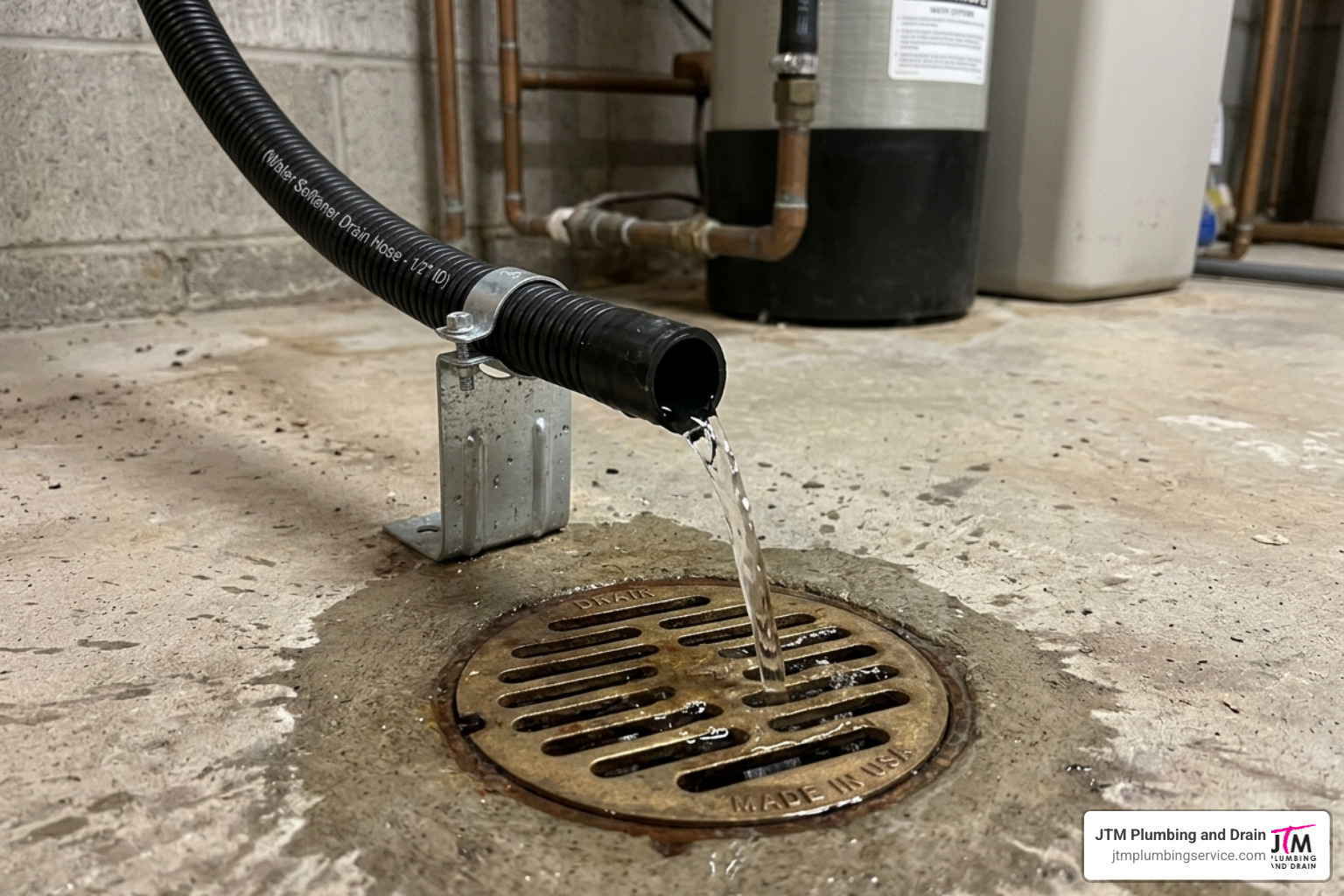
- Air Gap Requirements for Drain Lines: A critical safety measure is to maintain an air gap of at least 1.5 inches between the end of the softener's drain hose and the flood rim of the drain it empties into. This prevents dirty drain water from siphoning back into your clean water supply (backflow prevention).
- Proper Location: The softener should be installed:
- Close to the main water inlet of your home.
- Upstream of your water heater (so the heater receives soft water).
- On a flat, stable surface.
- Near a suitable drain and a standard 120V electrical outlet.
- In an area where the temperature stays above 40°F year-round, to prevent freezing.
For more detailed information on installations, check out our guide: More info about water softener installations.
Proper Assembly to Prevent Stress on the Bypass Valve
The bypass valve is a critical component, and proper assembly is key to its longevity and preventing leaks.
- Aligning and Supporting All Plumbing: As mentioned, all pipes connected to the bypass valve must be properly aligned and supported. Any tension or misalignment can put undue stress on the plastic valve ports, leading to cracks or leaks over time.
- Lubricating O-rings: When installing the bypass valve or its adaptors into the softener, lightly lubricate the O-rings with a silicone-based lubricant. This ensures a smooth, tight seal and prevents damage to the O-rings during assembly.
- Securing with C-Clips: Rheem softeners use C-clips to secure the bypass valve or installation adaptors to the softener head. Ensure these clips are fully seated and engaged, with all three teeth (if applicable) locked into place.
- Avoiding Overtightening Threaded Connections: While connections need to be tight to prevent leaks, overtightening can strip threads or crack plastic fittings. For metal threaded connections, use Teflon tape (applied clockwise) and tighten until snug, then an additional quarter to half turn. For plastic connections, hand-tightening is often sufficient.
- Using Two Wrenches for Tightening: When tightening threaded connections, especially those involving the bypass valve, use two wrenches. One wrench holds the fitting on the bypass valve steady, while the other tightens the pipe connection. This prevents twisting or damaging the bypass valve itself.
- Ensuring the Softener Tank is Level: The softener tank must be perfectly level. An unlevel tank can cause the internal piston to wear unevenly, leading to malfunctions and premature failure. Use shims if necessary to achieve a level installation.
Pressure and Temperature Limits for Piping
Understanding the operational limits of your Rheem softener and its connected plumbing is vital for preventing damage and ensuring efficiency.
- Water Pressure Limits: Rheem water softeners typically operate within a pressure range of 20 to 125 PSI. The ideal operating pressure for most softeners is between 40 and 80 PSI. If your home's water pressure consistently exceeds 80 PSI, we strongly recommend installing a pressure reducing valve (PRV) on your main water line before the softener. This will protect not only your softener but also your entire home's plumbing system from excessive pressure.
- Maximum Operating Temperature: The maximum operating temperature for the water flowing through the softener is typically around 100°F (38°C). While most cold water lines are well below this, it's a good limit to be aware of.
- Operating Temperature for the Unit: The softener itself, and particularly its plastic components, should never be exposed to freezing temperatures. Ensure the installation location stays above 40°F (4.4°C) year-round.
Drain Line Requirements
The drain line is crucial for the softener's regeneration cycle. Proper setup is essential to avoid operational issues and comply with health codes.
- Drain Hose Inside Diameter: For proper softener drainage performance, Rheem specifies that the drain hose must have an inside diameter of exactly 3/8 inch. Do not use a smaller diameter, as this can restrict flow and cause problems.
- Maximum Drain Hose Routing Limits: To ensure efficient drainage, adhere to these limits:
- Do not route the drain hose more than 8 feet vertically from the floor.
- Do not route the drain hose more than 30 feet horizontally.
- Maintaining a Continuous Downward Slope: The drain hose should always have a continuous downward slope to allow gravity to assist with drainage and prevent standing water in the line.
- Securing with Stainless Steel Hose Clamps: Secure the drain hose connections with stainless steel hose clamps to prevent leaks.
- Air Gap: As mentioned, a 1.5-inch air gap is required at the drain end to prevent backflow contamination.
Are There Special Considerations for Electrical Grounding and Existing Installations?
Beyond the plumbing connections, there are other important aspects to consider, especially concerning electrical safety and whether you're replacing an old unit or installing a new one for the first time.
Maintaining Electrical Grounding with Plastic Components
Many modern plumbing systems, especially those using PEX or CPVC, are non-conductive. If your home's main water line was previously used as a ground for your electrical system (common in older homes with copper or galvanized steel pipes), installing a water softener with a plastic bypass valve or non-conductive pipes can interrupt this grounding path.
- Restoring Ground Continuity: If you're using plastic bypass valves or non-conductive pipes (like PEX or CPVC) to connect your water softener, it is essential to restore the electrical grounding continuity of your main water line. This is typically done by installing a #4 copper wire that bridges the non-conductive section of pipe, connecting the metal pipes on either side of the softener. This ensures your main water line remains properly grounded to the house electrical system, which is a critical safety measure.
- Consult an Electrician: If you are unsure about your home's grounding system or how to properly install a grounding jumper, we strongly recommend consulting a qualified electrician.
Replacing Existing Softeners vs. First-Time Installations
The approach to installation can differ significantly based on whether you're replacing an old unit or installing a water softener for the first time.
- Replacing an Older Unit: This is often simpler, especially if an existing plumbing loop (a dedicated section of pipe for the softener) is already in place. If the old softener had a bypass valve, you might be able to reuse some of the existing plumbing, making the process quicker. However, it's still important to inspect the existing plumbing for wear and tear and ensure it meets current codes. Sometimes, Replacing the Bypass Assembly itself is necessary if it's worn or damaged.
- First-Time Installations: These may require cutting into your main water line to create the necessary bypass loop. This can be a more involved process and often benefits from professional expertise. Newer homes in areas like Omaha sometimes come with a pre-installed "water softener loop," which is a section of capped plumbing designed specifically for a softener. This simplifies first-time installations significantly by separating indoor and outdoor water lines, ensuring you don't waste softened water on outdoor irrigation.
When to Call a Professional Plumber
While many aspects of water softener installation can be DIY-friendly, there are times when calling a professional plumber is the smartest choice.
- Complex Installations: If your home's plumbing layout is unusual, or if you're dealing with older, corroded pipes, a professional can navigate these challenges safely and efficiently.
- Code Compliance: Ensuring your installation meets all local plumbing codes can be complex. A licensed plumber is familiar with these regulations and can guarantee compliance, preventing potential issues during inspections or future home sales.
- Uncomfortable Cutting into Main Water Lines: If the idea of cutting into your home's main water supply makes you uneasy, you're not alone. This is a critical step, and an error can lead to significant water damage.
- Electrical Grounding Concerns: As discussed, ensuring proper electrical grounding is vital for safety. If you're unsure, a professional can either handle it or advise you.
At JTM Plumbing and Drain, we offer honest, affordable, and reliable plumbing services for water softener installations in Gretna, Omaha, NE, Papillion, Elkhorn, La Vista, Bellevue, Springfield, and surrounding areas. Whether you need assistance with a complex first-time setup or simply want the peace of mind that comes with a professional installation, our team is here to help.
Frequently Asked Questions about Rheem Water Softener Connections
We often get questions from homeowners about their Rheem water softener connections. Here are some of the most common ones we encounter:
For a DIY Rheem water softener installation, you'll need a basic set of plumbing tools, including:
- Pipe Cutter: Appropriate for the type of pipe you're using (e.g., copper cutter, PEX cutter, PVC cutter).
- Measuring Tape: For accurate pipe lengths.
- Wrenches: Adjustable wrenches and possibly pipe wrenches for tightening connections.
- Deburring Tool: To smooth the edges of cut pipes.
- Silicone-Based Lubricant: Essential for O-rings on the bypass valve and adaptors.
- Teflon Tape: For metal threaded connections only.
- Bucket and Towels: For catching any drips during the process.
- Specific Tools for Chosen Pipe Material: If using PEX, you'll need a crimping or expansion tool and rings/fittings. If using CPVC, you'll need solvent cement and primer. If using push-to-connect fittings, a disconnect tool might be helpful.
Having these tools ready will make your installation go much smoother.
How do I ensure my water softener connections don't leak?
Preventing leaks is paramount for any plumbing project. Here's how we ensure leak-free connections:
- Properly Prepare Pipe Ends: Ensure all pipe ends are cut straight and deburred to remove any rough edges that could damage seals.
- Use Appropriate Sealants: Apply Teflon tape clockwise to metal male pipe threads (typically 2-3 wraps) or use a suitable pipe thread sealant. Avoid Teflon tape on plastic threads.
- Lubricate O-rings: Always lubricate O-rings on the bypass valve and adaptors with silicone grease before assembly.
- Tighten Connections Firmly but Avoid Overtightening: Hand-tighten plastic connections, then give them a small snug turn if needed. For metal connections, tighten until snug, then an additional quarter to half turn with a wrench, using a second wrench for backup.
- Slowly Open Water Supply and Check: After installation, slowly open the main water supply valve to repressurize the system. Carefully inspect all connections for any drips or leaks.
- Run a Regeneration Cycle: Once the system is pressurized, initiate a manual regeneration cycle. This will fill the softener and put it through its paces, allowing you to re-check all connections under operating conditions.
Can I connect my Rheem water softener to a well water system?
Yes, you can absolutely connect your Rheem water softener to a well water system in Nebraska. However, there's an important preliminary step:
- Well Water Analysis: We highly recommend getting a comprehensive well water analysis before installing any water treatment system. Well water can contain various contaminants like sediment, iron, manganese, sulfur, and bacteria, which can impact the softener's performance or even damage it.
- Additional Pre-Filtration: Depending on the analysis results, additional pre-filtration may be necessary. For instance, a sediment filter might be needed to protect the softener's resin bed from particulate matter, or an iron filter might be required if you have high levels of clear water iron that exceed the softener's capacity (Rheem softeners typically handle up to 8-11 ppm of clear water iron).
A proper analysis ensures your Rheem softener is protected and provides you with the best possible soft water.
Conclusion
Choosing the right pipe or tubing for your Rheem water softener connection from the bypass valve to your house water is crucial for a successful, long-lasting installation. By understanding the standard 1-inch Male NPT connection size, selecting approved materials like copper, PEX, or CPVC, and following best practices for assembly and code compliance, you can ensure your system operates efficiently. Whether you opt for the convenience of flexible connectors and push-to-connect fittings or the durability of rigid piping, always prioritize proper support and leak prevention. If you're unsure about any step or prefer professional assistance, don't hesitate to contact experienced plumbers like JTM Plumbing and Drain for reliable water softener installations. We're here to help homeowners in Gretna, Omaha, and surrounding Nebraska communities enjoy the benefits of soft water.


