

Hard Water Is a Real Problem in Springfield: Here's What to Do About It
If you're looking at salt based softeners Springfield homeowners rely on, here are the top things to know before you buy:
- Springfield, NE area water averages around 9.2 grains per gallon (GPG), firmly in the "moderately hard to hard" range
- Salt-based softeners are the most effective solution for fully removing calcium and magnesium from your water
- They work through ion exchange, swapping hardness minerals for sodium or potassium ions
- Professional installation typically takes 2 to 4 hours
- Ongoing maintenance means refilling salt every 4 to 6 weeks and an annual system check
Hard water isn't a health risk, but it creates real daily frustrations. Spots on your dishes. Dry skin after a shower. White crust building up around your faucets. Appliances wearing out faster than they should. These aren't just annoyances, over time, they cost you money.
The good news: a salt-based water softener solves all of it at the source.
I'm Jon Miller, Master Plumber and co-owner of JTM Plumbing & Drain, and I've been working with water treatment systems, including salt based softeners Springfield and surrounding Nebraska communities depend on, since 1993. In this guide, I'll walk you through everything you need to know to choose the right system for your home.
Understanding Water Hardness in Springfield NE
When we talk about "hard water," we are referring to water that has a high concentration of dissolved minerals, specifically calcium and magnesium. In our neck of the woods, this is a very common issue. Springfield, NE sits in a region where the natural groundwater interacts with limestone and other mineral-rich soil, picking up these elements before the water ever reaches your tap.
According to the U.S. Geological Survey, nearly 90 percent of American homes deal with hard water. Here in Springfield NE, the average hardness level is approximately 9.2 grains per gallon (or about 156 ppm). To put that in perspective, anything over 7 grains per gallon is considered "hard."
If you aren't sure if your home is affected, look for these common signs:
- White Crusty Buildup: You'll see this "limescale" on your showerheads, faucets, and inside your tea kettle.
- Soap Scum: That stubborn film on your shower doors or bathtub that seems impossible to scrub away.
- Stiff Laundry: Towels that feel like sandpaper and clothes that look dull or gray after a few washes.
- Dry Skin and Hair: Hard water prevents soap from rinsing away cleanly, leaving a film that strips moisture from your body.
- Spotty Dishes: Cloudy glassware and spots on silver, even after a full dishwasher cycle.
While the city does its best to treat the water, the "natural" hardness remains high enough to cause significant wear and tear on your plumbing over time.
The Science Behind Salt Based Softeners Springfield
A common question we get at JTM Plumbing is: "How does a salt-based system actually work?" It's not just a filter that catches rocks. It's a chemical process called ion exchange.
Water softeners consist of two main parts: a tall resin tank and a shorter brine tank. Inside the resin tank are millions of tiny plastic beads, known as resin. These beads are negatively charged. Since opposites attract, they are designed to grab onto positively charged minerals.
The Ion Exchange Process
Think of the resin beads like a sponge that is specifically "hungry" for calcium and magnesium. As hard water flows through the resin tank, the calcium and magnesium ions stick to the beads. To make room for them, the beads release a tiny amount of sodium (or potassium) into the water.
By the time the water exits the tank and travels to your kitchen or bathroom, the hardness minerals have been physically removed and replaced with "soft" ions. This is why water softener installations are so effective; they don't just "condition" the water; they fundamentally change its chemistry to be gentler on your home.
Eventually, those resin beads get "full" of calcium and can't hold any more. This is when the system goes into a regeneration cycle. The system flushes the resin with a heavy saltwater solution from the brine tank, which "knocks" the calcium off the beads and sends it down the drain, recharging the beads with fresh sodium for the next round.
Sodium vs. Potassium Options
When deciding on a water softener, you have a choice in what you put in your brine tank.
- Sodium Chloride (Salt): This is the traditional and most affordable option. It is highly effective and widely available.
- Potassium Chloride: If you are on a strictly sodium-restricted diet or are concerned about the environment, potassium is an excellent alternative. It works exactly the same way in the ion exchange process but adds potassium to the water instead of sodium.
The amount of sodium added to softened water is actually very small, usually less than what you'd find in a slice of white bread, but for those with specific health concerns, potassium offers peace of mind.
Comparing Salt-Based Softeners to Salt-Free Conditioners
As you research salt based softeners Springfield options, you will undoubtedly run into "salt-free conditioners." It is vital to understand that these two systems do completely different things.
Water conditioning usually refers to systems that use Template Assisted Crystallization (TAC). These systems don't actually remove minerals. Instead, they "sequester" or change the structure of the minerals so they don't stick to your pipes as easily.
True Softening vs. Conditioning
The main difference is the "feel" and the "cleaning power."
- Salt-Based Softeners: These remove the minerals. You will get that "slippery" feel in the shower, your soap will lather perfectly, and your clothes will be noticeably softer.
- Salt-Free Conditioners: These do not remove the minerals. Your water will still test as "hard" on a chemical test. While they help reduce scale buildup in pipes, they won't help with dry skin, soap scum, or dingy laundry.
In a place like Springfield where the water is truly hard, a conditioner often feels like a half-measure.
When to Choose Salt-Based Systems
We almost always recommend salt-based systems for Springfield homeowners because of the benefits that only true softening can provide. If you have visible white scale on your fixtures or you're tired of buying extra lotion for itchy skin, a salt-based system is the only way to get the results you're looking for. Conditioners are great for apartments or areas with very mild hardness, but they usually struggle with our local water levels.
Financial and Lifestyle Benefits for Local Homeowners
Installing a water softener is an investment, but it's one that usually pays for itself in just a few years. In fact, soft water can reduce hot water heating costs by nearly 30% according to research from the University of New Mexico. Why? Because your water heater doesn't have to heat through a thick layer of rock (scale) at the bottom of the tank.
Economic Advantages of Salt Based Softeners Springfield
The savings go beyond just the energy bill:
- Appliance Longevity: Hard water can shorten the life of your dishwasher and washing machine by years. Soft water keeps them running like new.
- Detergent Savings: The Battelle Institute found that soft water requires up to 75% less soap and detergent to get the same level of clean. You can also wash clothes at lower temperatures (saving energy) and still get them cleaner than you would with hard water.
- Reduced Plumbing Repairs: Scale buildup inside pipes can lead to clogs and reduced water pressure. By removing the minerals, you protect the "veins" of your home.
Impact on Skin and Hair Health
One of the first things our customers notice after a JTM Plumbing installation is how much better they feel. Hard water minerals react with soap to create "curd". That sticky residue that stays on your skin.
- Softer Skin: Without that soap film, your skin's natural oils can do their job. This is a game-changer for people with eczema or sensitive skin.
- Shinier Hair: Soft water allows shampoo to rinse out completely, leaving hair more manageable and less dull.
- Better Shaves: Shaving cream lathers better and the razor glides smoother on soft water, leading to less irritation.
Maintenance and Troubleshooting Your Softening System
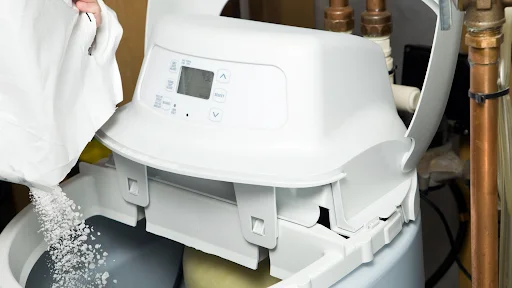
A high-quality water softener can last 10 to 15 years, but it does require a little bit of love. Most households need to refill their brine tank every 4 to 6 weeks. We recommend keeping the salt level at about half to two-thirds full; don't pack it all the way to the top, as this can lead to "bridging."
Troubleshooting Salt Based Softeners Springfield
If you notice your water suddenly feels hard again, there are a few things you can check before calling us:
- Salt Bridges: Sometimes a hard crust forms over the water in the brine tank. It looks like you have salt, but there's actually a hollow gap underneath. Take a broom handle and gently poke the salt to see if it collapses.
- Salt Mushing: This happens when salt dissolves and recrystallizes into a thick sludge at the bottom of the tank, blocking the intake. You'll need to scoop out the "mush" and clean the tank.
- Bypass Valve: Check to make sure your system hasn't been accidentally put into "bypass" mode (which sends hard water directly to the house without softening it).
- Error Codes: Modern systems like the ones we install often have digital displays. If you see an error code, it usually points to a specific mechanical issue or a need for a manual regeneration.
Routine Maintenance Schedule
To get the most out of your water softener installation, we suggest an annual "check-up." During a professional visit, we:
- Clean the brine tank and the injector assembly.
- Test the water hardness to ensure the system is calibrated correctly.
- Inspect the valves for any signs of wear.
- Check the resin beads for "fouling" (especially if you have high iron levels in your water).
Frequently Asked Questions
How do I know if my Springfield water is hard?
The easiest way is to look for white spotting on your glassware or scale on your showerhead. However, for a precise reading, we recommend a professional water test. Most Springfield homes sit around 9.2 GPG, but this can vary slightly depending on your specific neighborhood and the age of your plumbing.
Are there local regulations on salt-based softeners?
In some parts of the country, salt-based systems are restricted due to the brine discharge. However, in Springfield, NE and the surrounding Omaha metro area, salt-based softeners are perfectly legal and are the standard solution for residential water treatment. We always ensure our installations meet all local plumbing codes and environmental standards.
How long does a typical water softener last?
With proper maintenance, you can expect a professional-grade system to last between 10 and 15 years. Lower-end "big box" store models often have shorter lifespans and are harder to repair because parts aren't as readily available. We always recommend choosing a system with a solid warranty on the tanks and valves.
Conclusion
Living with hard water is an unnecessary burden on your wallet and your comfort. At JTM Plumbing and Drain, we believe every Springfield homeowner deserves water that is clean, soft, and safe for their plumbing. Whether you are dealing with a 20-year-old system that finally gave up or you're ready to experience soft water for the first time in a new home, we are here to help.
We pride ourselves on offering honest, affordable, and reliable service. We won't sell you a system you don't need, and we'll make sure the one you do choose is perfectly sized for your family's water usage.
Ready to say goodbye to limescale and hello to softer skin? Explore our water softeners page or give us a call to schedule your professional water analysis today. We serve Gretna, Omaha, Springfield, and the entire surrounding area with emergency support and a commitment to doing the job right the first time.


.svg)
.webp)