Water treatment systems are devices that remove contaminants from your home's water supply — whether that water comes from a city main or a private well.
Here's a quick look at the most common types:
The right system depends on what's actually in your water. Testing your water first is always the smartest first step.
Clean, safe water isn't something most homeowners think about until something goes wrong — an odd smell, a strange taste, staining on fixtures, or a health concern that prompts a closer look. Municipal water in the Bellevue, Nebraska area meets EPA standards, but that doesn't mean it's free of every contaminant by the time it reaches your tap. Aging pipes, agricultural runoff, and naturally occurring minerals can all affect what comes out of your faucet. For Nebraska homeowners on private wells, the responsibility for water safety falls entirely on you.
I'm Jon Miller, Master Plumber and co-owner of JTM Plumbing & Drain, and I hold a Nebraska Grade VI Water Operator License — the highest water operator classification in the state — which gives me a deep understanding of home water treatment at both the residential and large-scale public supply level. In this guide, I'll walk you through everything you need to know to make a confident, informed decision for your home.
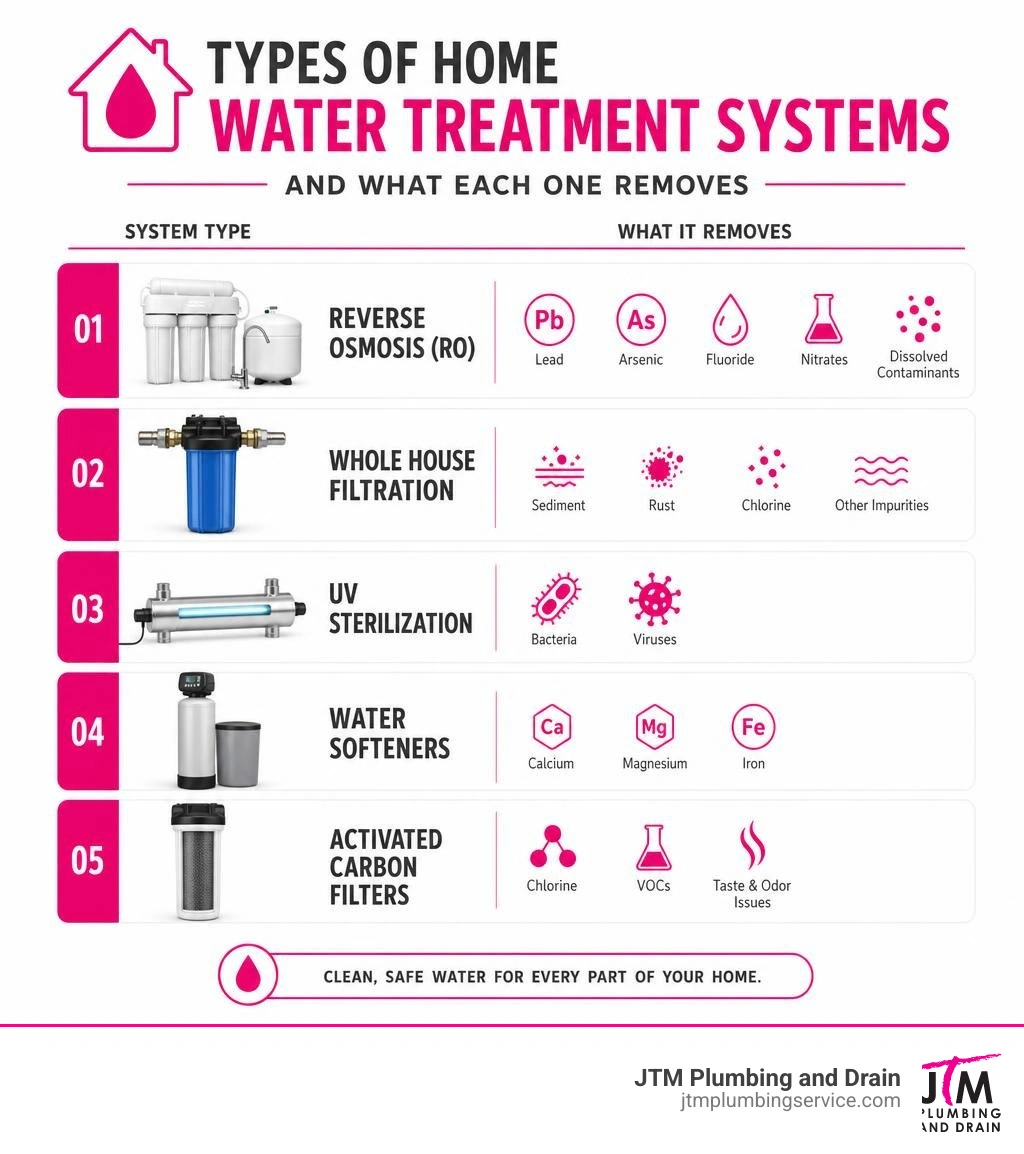
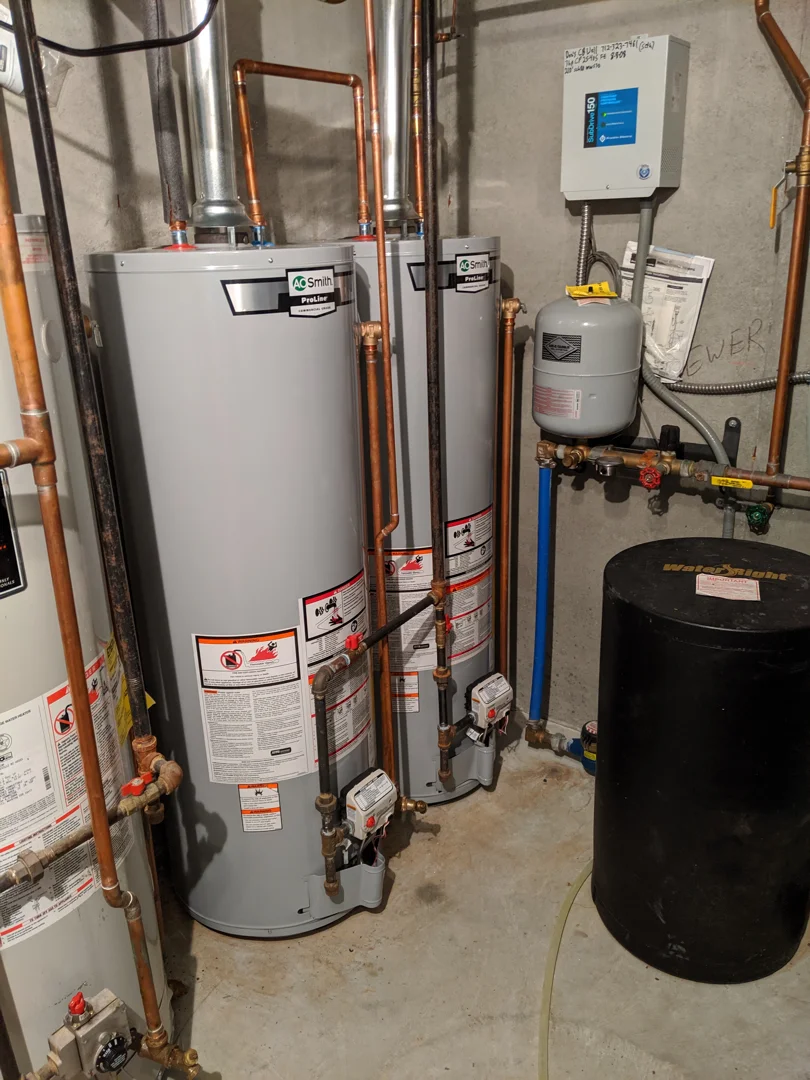
When exploring water treatment options for your home, you will quickly realize that there is no single "magic bullet" filter that removes every single contaminant. Different technologies target different impurities. Understanding how these systems differ in function and application is key to choosing the right setup for your household in Bellevue, Nebraska.
The main options available to homeowners include:
If you are dealing with mineral buildup on your fixtures, dry skin, or laundry that feels like sandpaper, you are likely dealing with Nebraska's notoriously hard water. In these cases, installing water sfteners is the most effective way to protect your plumbing infrastructure and appliances.
Reverse osmosis is widely regarded as the gold standard for drinking water purification. RO systems work by forcing pressurized water through a semi-permeable membrane with incredibly tiny pores (approximately 0.0001 microns). This physical barrier blocks almost everything except pure water molecules.
RO systems are incredibly effective, removing up to 99.99% of 158 impurities, including Total Dissolved Solids (TDS), lead, copper, chromium, fluoride, nitrates, and even "forever chemicals" like PFAS.
However, RO technology has a few unique operational characteristics:
When designing your home's water treatment strategy, you must decide between Point-of-Use (POU) and Point-of-Entry (POE) systems.
POU systems are installed at a single location, such as under the kitchen sink or inline with your refrigerator's ice maker. They only treat the water coming out of that specific tap. This is highly cost-effective if your primary goal is clean, delicious water for drinking and cooking.
POE systems, often called whole house systems, are installed where your main water line enters the home. Every drop of water that flows through your pipes — whether it goes to your shower, washing machine, dishwasher, or outdoor spigot — passes through this system first.
When choosing between the two, flow rate is a critical factor. POU systems deliver water slowly, which is fine for filling a glass of water but useless for taking a shower. POE systems must maintain a high flow rate to keep up with a busy household. High-quality whole house systems filter up to 14+ gallons per minute, ensuring you never experience a drop in water pressure when multiple appliances are running.
If you are looking to address issues like chlorine odors in your showers or scale buildup in your water heater, investing in POE water treatment systems in Nebraska is the most comprehensive way to protect your entire home.
Before you spend a single dollar on a water treatment system, you need to know exactly what is in your water. Guessing can lead to buying a system that does not address your actual problems.
The first step is always water testing. For municipal water users in Bellevue, Nebraska, you can start by reviewing your city's annual water quality report. However, keep in mind that these reports reflect the water quality at the treatment plant, not necessarily what comes out of your kitchen faucet after traveling through city mains and your home's internal plumbing.
For homeowners on private wells in Nebraska, annual testing is a necessity. Well water is highly susceptible to localized agricultural runoff (nitrates, pesticides), naturally occurring heavy metals (arsenic, uranium), and bacterial contamination (coliform, E. coli).
You can perform basic DIY tests at home for hardness and chlorine, but for a comprehensive analysis, we always recommend sending a water sample to an independent, certified laboratory. This will give you precise numbers for:
Once you have your lab results, you can target your water issues precisely. For instance, if your water is safe but contains high levels of calcium and magnesium, you will experience the life-changing benefits of owning a water softener, which include softer skin, cleaner laundry, and scale-free pipes.
To choose the right system, it helps to understand the physical limits of different filtration technologies. Filtration is largely a game of pore size. The smaller the pore, the more contaminants the system can physically block.
If you are dealing with challenging well water contaminants like iron, manganese, and hydrogen sulfide (which causes a rotten-egg smell), physical filtration alone is rarely enough. In these scenarios, a specialized chemical oxidation and catalytic carbon system is required to oxidize the dissolved minerals into a physical state so they can be safely trapped and backwashed out of the system.
When shopping for water treatment systems, you will run into several optional features and add-ons designed to customize your water quality:
If you are looking for a highly efficient, under-sink drinking water solution that combines these features, systems like the alkaline remineralization and permeate pumps upgrade package provide an outstanding balance of water conservation and premium taste.
No matter which system you choose, always look for NSF/ANSI certifications. These certifications (such as NSF 53 for health effects, NSF 58 for reverse osmosis, and NSF 372 for lead-free compliance) prove that the system has been independently tested and verified to remove the specific contaminants the manufacturer claims it does.
A water treatment system is not a "set-it-and-forget-it" appliance. To keep your water safe and protect your investment, routine maintenance is absolutely critical. A neglected filter will eventually clog, lose its effectiveness, and can even become a breeding ground for bacteria.
Here is what you can expect in terms of ongoing maintenance:
As a general rule of thumb, a whole house system's physical lifespan is closely tied to its capacity: you can expect roughly 1 year of service life for every 100,000 gallons of filtration capacity. For example, a system rated for 1,000,000 gallons can easily last up to 10 years in a standard household before the main filtration media needs replacement.
If you want to keep your system running at peak performance without the hassle of tracking filter dates, professional water conditioning maintenance plans are a highly convenient option to ensure your home's water quality never degrades.
A water softener is a highly specialized system designed to do one job: remove hardness minerals (calcium and magnesium) to prevent scale buildup in your pipes and appliances, make cleaning easier, and soften your skin and hair. A water filter, on the other hand, is designed to remove chemical contaminants, heavy metals, sediment, and biological pathogens to make your water safe and pleasant to drink. Many homes in our area benefit from having both systems installed in tandem.
In most residential applications, the main RO membrane will last between 2 to 4 years. However, this lifespan is entirely dependent on how regularly you change the sediment and carbon pre-filters. If you let the pre-filters clog, chlorine and sediment will quickly reach the delicate RO membrane, destroying it in a matter of months. Extremely hard water will also shorten the membrane's lifespan, which is why we often recommend installing a water softener upstream of an RO system.
It depends on what you mean by "effective." If your goal is to prevent damaging white scale buildup inside your water heater, pipes, and appliances, a salt-free conditioner does an excellent job. However, because salt-free systems do not actually remove the hard minerals from the water (they only change their physical structure), you will not get the other benefits of traditional softening. Your water will still feel hard, you will still need to use more soap, and you may still see water spots on your dishes.
Investing in the right water treatment setup is one of the most impactful decisions you can make for your family's health, your plumbing system, and your peace of mind. Whether you are dealing with hard municipal water in Bellevue, NE, or managing a private well elsewhere in Nebraska, there is a tailored filtration solution that can transform your tap water.
Because water chemistry is complex and improper installation can lead to water damage or bypass loops that render your filters useless, professional installation is always recommended. At JTM Plumbing & Drain, we pride ourselves on providing honest, transparent, and highly reliable plumbing services. We do not believe in pushy sales tactics or selling you expensive systems you do not actually need.
If you are ready to take the first step toward pure, clean water throughout your entire home, contact us today to discuss our professional home water systems installation and maintenance services.
Fill out our form or call us today!


